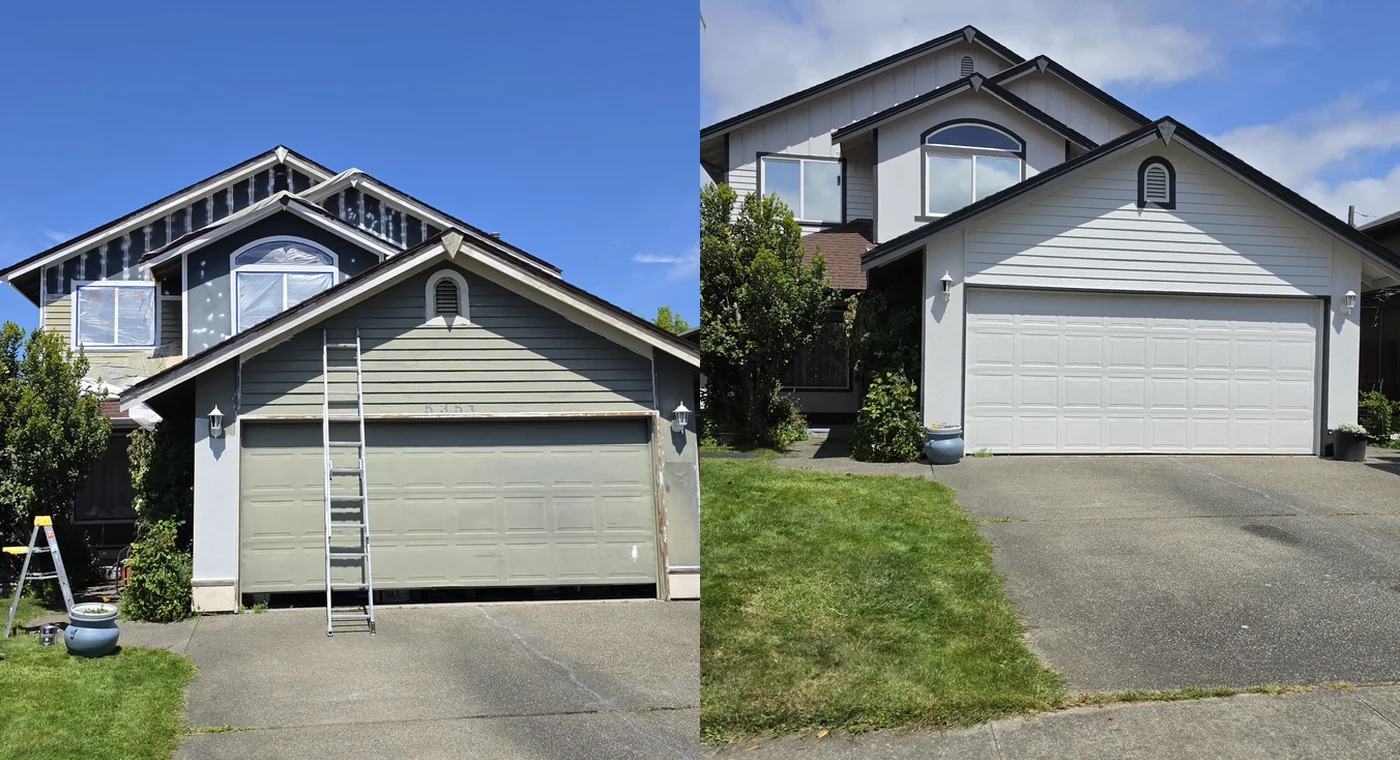
Same house, different numbers
Exterior painting estimates can vary because contractors price different prep standards (light scraping versus full cleaning, sanding, and caulking), a different number of coats, different included surfaces (siding only versus siding, trim, fascia, and soffits), and different repair allowances. Rombyk Painting writes every exterior estimate after an in-person walk-through of the property, not a per-square-foot formula, and offers a 3-year workmanship warranty on qualifying work, subject to the written terms.
You invite three painting contractors to look at the same house. Each one walks around the property, checks the siding, asks a few questions, and promises to send an estimate.
Consider an illustrative comparison, not a Rombyk price list: one contractor quotes $7,500. Another comes in at $11,000. The third wants nearly $15,000. The house has not changed. The square footage is the same. Everyone is supposedly estimating the same project.
In many cases, they are not estimating the same project at all. The gap usually comes down to prep standards, materials, number of coats, repair allowances, and how much responsibility each contractor is taking for the final result.
Compare scope line by line before comparing price. Licensed and insured. Written estimate before work starts. 3-year workmanship warranty on qualifying work.
The largest price gap is usually hidden in the prep
Most homeowners expect paint quality to be the biggest factor behind the final price. In reality, preparation is where estimates often start to separate.
Ask three painting contractors what "exterior preparation" includes, and you may hear three very different answers. One may plan a thorough cleaning, scraping, sanding, caulking, and spot-priming before any finish coat is applied. Another may focus only on the obvious peeling areas. Both proposals might simply say "prep included," even though the labor behind those two words is dramatically different.
Proper preparation creates a stable surface for the new coating. When deteriorated caulking, loose paint, exposed wood, or failing coatings are left behind, the new finish may look good at first but is far more likely to fail prematurely.
Every home requires a different amount of preparation. A house that was repainted before the previous coating deteriorated may need relatively little corrective work. A home with widespread peeling paint and weathered trim requires considerably more labor. That difference alone can change an estimate by thousands of dollars.
One coat and two coats are not the same painting system
Homeowners often assume every proposal includes the same number of coats, but that is not always the case. Some projects are priced around a single finish coat, while others include two full coats or specify coverage only where necessary.
The right approach depends on the existing surface, the selected product, the color change, and the overall condition of the home. It is not a universal rule that every project must receive two coats.
A detailed estimate should define the surfaces being painted, where primer will be applied, how many finish coats are included, and whether additional coverage would be needed for difficult color changes. When those details are missing, homeowners are often comparing two completely different scopes of work without realizing it.
Paint quality changes more than the material cost
The paint itself gets blamed for a lot of price gaps that actually have little to do with the paint. The coating selected for a project often reflects the contractor's overall approach rather than simply the cost of a gallon of paint.
A proposal that simply mentions "premium exterior paint" tells very little about what will actually be applied. A professional estimate should identify the manufacturer and product line, or clearly explain when that decision will be finalized, so both sides understand exactly what is included. Material quality matters, but by itself it rarely explains why one estimate is several thousand dollars higher than another.
Contractors may be measuring different amounts of work
"Paint the exterior" sounds straightforward, but it can describe very different projects. Some companies include trim, fascia, soffits, doors, gutters, porch ceilings, railings, and detached garages. Others price only the siding and basic trim unless additional items are requested.
Homes with complex rooflines, dormers, multiple elevations, or extensive trim require a different amount of work from a simple rectangular house. Even when the floor area is similar, the paintable surfaces, detail work, and access can differ substantially. An exterior painting estimate should account for those differences rather than relying on floor area alone.
Our exterior painting service starts by defining exactly which surfaces are included so homeowners understand what they are comparing.
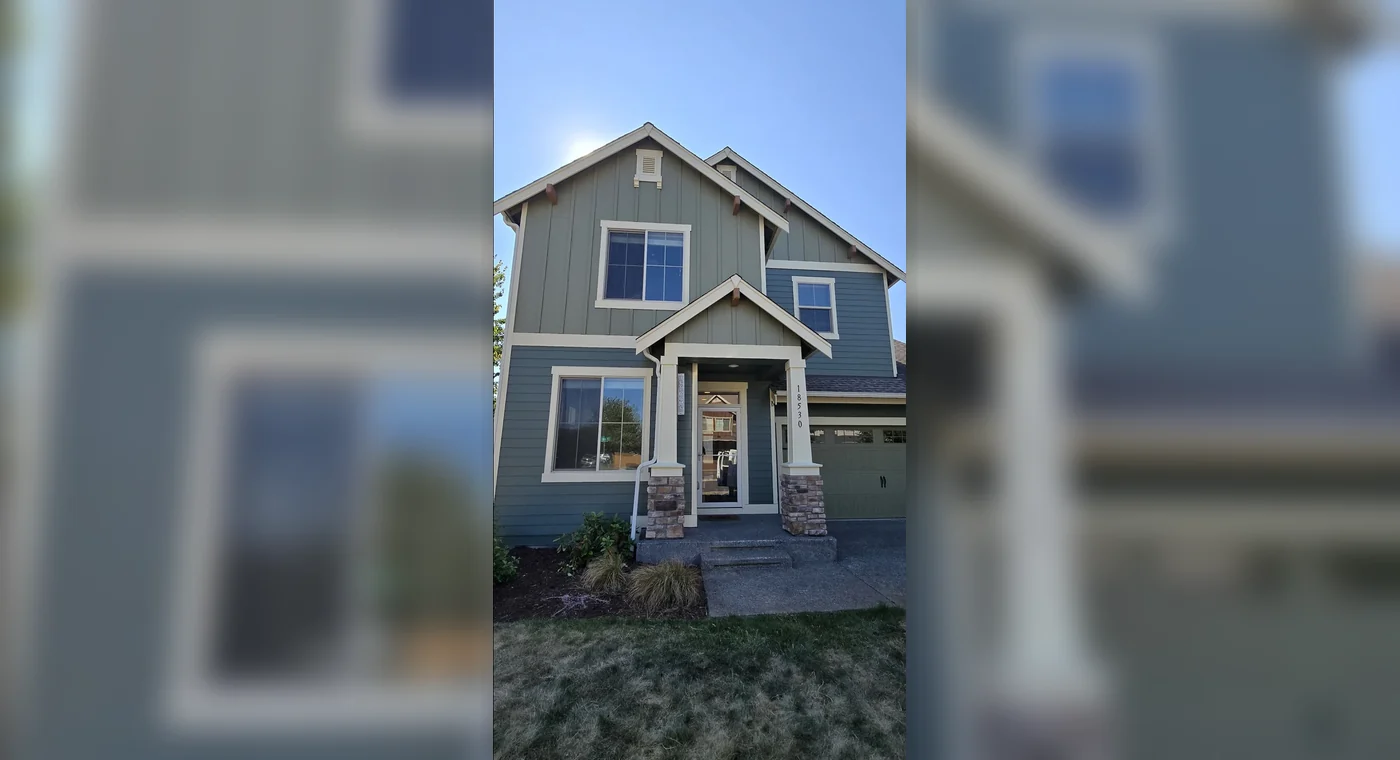
Access and safety affect labor costs
A one-story house with open, flat access takes far less setup than a property with steep grades, tall gables, multiple roof levels, or a narrow side yard, and plenty of homes around the Puget Sound region fall into that second category. In some situations, additional equipment such as scaffolding or lifts is necessary just to reach the work safely.
These factors add labor time before a single wall gets primed, which is why two similar-looking homes can receive noticeably different estimates. This is also one reason experienced contractors prefer inspecting a property in person rather than relying entirely on satellite imagery or online measurements.
During the on-site evaluation, Rombyk reviews access, grade, rooflines, and the condition of the included surfaces before preparing a written estimate. Visible access and setup requirements can then be included in the scope. Concealed damage may still require separately approved work.
Wood repairs may be included, excluded, or left undefined
Exterior painters regularly find damaged trim, deteriorated siding, soft wood, and failed joints once they start prepping a house. Contractors handle this in very different ways: some estimates carry a defined repair allowance, others exclude repairs entirely, and others quote an hourly rate without saying how many hours the job is likely to need.
This is often where a lower estimate stops being the lower estimate. Repair charges and change orders get added later, and the final invoice can end up higher than a competitor's original number. To be fair to contractors, this isn't always avoidable. Nobody can know the full extent of concealed damage until the old coating and loose material come off.
- Which visible repairs are included
- Which repairs are excluded
- How additional damage will be documented
- How change orders will be priced
- Whether repair approval is required before additional work begins
Labor standards are not the same across painting companies
Exterior painting is ultimately a labor-driven service, and no two companies organize their projects in exactly the same way. Some operate with small owner-led crews and minimal overhead. Others include project managers, office staff, dedicated supervisors, and structured quality-control procedures. Neither approach is automatically better, but they result in different operating costs.
The proposal should explain how the company will carry out the specified work. A professional proposal should leave you with a clear picture of who oversees the project, how quality gets checked, and how concerns get handled before the job is considered finished.


Insurance and licensing are part of the price
The price of an exterior painting project reflects more than labor and materials. Professional contractors also invest in liability insurance, workers' compensation coverage, licensing, safety equipment, vehicle maintenance, project management, and warranty support. These costs are rarely visible during the project, but they are part of operating a legitimate painting business.
For that reason, the lowest estimate should never be evaluated on price alone. It should also be evaluated based on the responsibilities and protections included with the work.
Rombyk Painting is licensed and insured in Washington (WA License #ROMBYPL800M3), and that coverage is built into every estimate we write, not billed as an add-on later.
Warranty language can sound similar but cover different things
Two contractors can both say "we offer a warranty" and mean very different things by it. Exterior coating failures can result from workmanship, product problems, leaks, ongoing moisture intrusion, substrate deterioration, or structural movement. No legitimate warranty covers every possible condition.
- How long the coverage lasts
- Which types of failure are covered
- Which conditions are excluded
- Whether labor and materials are included
- How the homeowner submits a warranty request
- Whether the warranty is provided in writing
A long warranty tacked onto a vague estimate isn't necessarily worth more than a shorter, clearly defined one from a contractor with documented experience in your area.
Some estimates are detailed. Others are designed to win the job.
Not every proposal is written with the same goal. Some contractors focus on defining the project as accurately as possible from the beginning. Others provide a lower starting price while leaving important items undefined until the work is underway. That doesn't automatically mean an estimate is intentionally misleading. Sometimes important details get overlooked during the inspection, or a generic estimating template simply doesn't reflect the property's actual condition.
Watch for estimates that rely heavily on phrases such as "as needed," "standard preparation," "paint exterior," "minor repairs included," "one or two coats," "premium materials," or "additional work extra." These phrases are not automatically a problem, but they should be clarified before the contract is signed.
How to compare exterior painting estimates correctly
Do not begin by arranging the estimates from lowest to highest. First, compare the scope. Create a simple side-by-side comparison and answer these questions for each proposal. It's the same checklist we walk homeowners through before they sign with anyone, including us.
- What surfaces are included: siding, trim, fascia, soffits, doors, gutters, railings?
- What preparation is specified: cleaning, scraping, sanding, caulking, priming, masking?
- What repairs are included: allowances, exclusions, hourly rates, change orders?
- Which products will be used, and who selects them?
- How many coats are included?
- How will the paint be applied, and is the method appropriate for the surface?
- Who protects and cleans the property during the work?
- Who manages the project and inspects the finished work?
- What coverage does the written warranty provide?
- What is explicitly excluded from the price?
Once the scope is aligned, the prices usually become easier to understand.
Does the highest estimate mean the best work?
Not automatically. A high price is not proof of superior craftsmanship, just as a low price is not proof that corners will be cut. The strongest estimate combines a realistic assessment of the house, a clearly defined scope, appropriate preparation, suitable coating products, professional project management, clear communication, and a price that matches the promised work.
You are looking for the best-supported estimate, not simply the highest or lowest number. The contractor should be able to explain the price without becoming defensive or relying on generic claims about quality.
It's the standard we hold every Rombyk estimate to: if we can't explain a line item in plain language, it doesn't belong on your proposal.
When a lower exterior painting estimate can make sense
A lower number on the page doesn't automatically mean something is being cut. There are legitimate reasons one company charges less than another: lower administrative overhead, better scheduling efficiency, a smaller service area, existing equipment for difficult access, favorable supplier pricing, or a crew that is particularly efficient with that type of home.
The warning sign is not a low price by itself. It is a low price combined with vague preparation, undefined materials, missing surfaces, unclear insurance, or no written process for repairs and changes.
The most important question to ask every exterior painter
Instead of asking only "Why is your estimate higher?" ask: "What work is included in your estimate that may not be included in another contractor's estimate?" This gives the contractor a chance to explain the actual differences.
A knowledgeable estimator should be able to walk through the preparation, products, labor, repairs, application methods, protection, supervision, and warranty without relying on sales pressure. You should leave that conversation with a clearer understanding of the project, even if you decide to hire someone else.
A clear estimate should make the decision easier
An exterior painting estimate should do more than provide a price. It should explain how the contractor plans to move your home from its current condition to a properly prepared and professionally finished exterior. When estimates are thousands of dollars apart, the solution is not to guess which contractor is being fair. The solution is to compare what each company has inspected, included, excluded, and promised.
Rombyk prepares exterior painting estimates based on the condition of the home and the agreed work. Preparation, included surfaces, coating plans, and property protection are reviewed before the scope is agreed, so homeowners can compare what each proposal includes.
Rombyk is licensed and insured in Washington. A 3-year workmanship warranty applies to qualifying exterior painting work, subject to the written terms. Free written estimates are available throughout our service area, including communities in Kitsap, Pierce, and King counties. Each estimate reflects the property’s surfaces, condition, preparation, and access.
Ready for an estimate that explains itself?
Get a clear, written scope before you compare it to anything else.
Exterior painting estimate questions
Why can exterior painting estimates differ by thousands of dollars?
Estimates often include different amounts of preparation, different surfaces, different paint products, different numbers of coats, and different repair allowances. Labor standards, access requirements, supervision, insurance, and warranty coverage can also create major price differences.
Is the lowest exterior painting estimate usually a bad choice?
Not necessarily. A lower estimate may come from an efficient contractor with lower overhead. The concern is whether the estimate leaves out important preparation, materials, repairs, surfaces, or project protections. Compare the written scope before comparing the total price.
Should an exterior painting estimate include the paint brand?
A professional estimate should identify the proposed manufacturer and product line or explain when the final coating will be selected. Terms such as "quality paint" or "premium paint" are too broad for an accurate comparison.
Does every exterior painting project need two coats?
Not every project requires the same coating system. The correct number of coats depends on the existing surface, color change, product, condition of the previous coating, and desired result. The contractor should clearly state what is included and why.
Why does exterior paint preparation cost so much?
Preparation is labor-intensive and may involve washing, scraping, sanding, caulking, spot-priming, masking, and protecting the property. The worse the existing coating and substrate condition, the more preparation time the project requires.
Can a painting contractor provide an exact price before finding hidden wood damage?
A contractor can price visible conditions, but concealed deterioration may not be fully known until loose coatings or damaged materials are removed. The estimate should explain how additional repairs will be documented, approved, and priced.
What should be included in an exterior painting estimate?
The estimate should define the surfaces, preparation, repairs, primer, finish products, number of coats, application method, property protection, cleanup, exclusions, payment terms, and warranty coverage.
How many exterior painting estimates should a homeowner get?
There is no required number, but multiple estimates can help homeowners understand the available approaches and typical scope. The estimates are useful only when the included work is compared line by line rather than by total price alone.